Blog content that reaches shoppers in search and AI answers
We wrote educational and product-focused blog content for a DTC ecommerce brand, helping readers move from discovering client's products to comparing products and choosing what to buy. The blog now ranks for 148 US keyword variants, including 31 in the top 10, and its content appears as a source in Google AI Overviews and ChatGPT answers.
Reaching shoppers before they’re ready to buy
Building awareness through useful content
The brand needed to reach people at different stages of their buying journey. Some were looking for recipes and ways to make it part of their routine. Others were researching equipment or comparing products before making a purchase.
We wrote blog content for those different needs, connecting practical education with the questions shoppers ask when choosing a product.
Giving readers a reason to discover the brand
The goal was to bring relevant readers into the brand’s world through useful answers. Educational articles introduced the topic, practical guides helped readers explore it, and product comparisons supported their buying decisions.
- Educational content for readers discovering product
- Practical guidance for readers exploring everyday use
- Product comparisons for shoppers evaluating their options
- A blog strategy connected to the DTC buying journey
Turning a blog into a useful part of the buying journey
Covering more than product searches
People don’t always start their research with a product name. They might search for a recipe, ask how long freshness lasts or explore the benefits of making it at home.
We needed content that could meet those readers early, while also serving shoppers who were closer to choosing equipment.
Balancing reach with purchase relevance
Recipe content could introduce the brand to a wider audience. Product comparisons could reach a smaller group with a more immediate buying question.
Our approach brought both together: useful educational content to build awareness, alongside focused articles that helped readers evaluate their options.
- Reach readers through questions they already search for
- Build awareness beyond product-name searches
- Connect educational topics with the brand’s products
- Support shoppers as they move toward a purchase
We wrote content for the whole funnel
Top of funnel: practical education
We wrote educational content around recipes, fresh produce and everyday questions. These articles gave readers useful starting points and helped the brand appear during early research.
Middle of funnel: helping readers explore their options
We covered topics that helped readers understand how it could fit into their lives, including making it at home and comparing it with store-bought alternatives.
This content connected initial interest with more practical decisions.
Bottom of funnel: product comparisons
We also wrote comparison content for shoppers weighing up different products. These articles addressed specific buying questions and gave the blog a presence in searches closer to a purchase.
Together, the content covered the journey from “I’m interested in X” to “Which product should I choose?”
- Recipe and educational articles to build awareness
- Practical guides to develop readers’ interest
- Comparison articles to support buying decisions
- Content aligned with questions across the funnel
148 ranking keyword variants and visibility in AI answers
A measurable organic search footprint
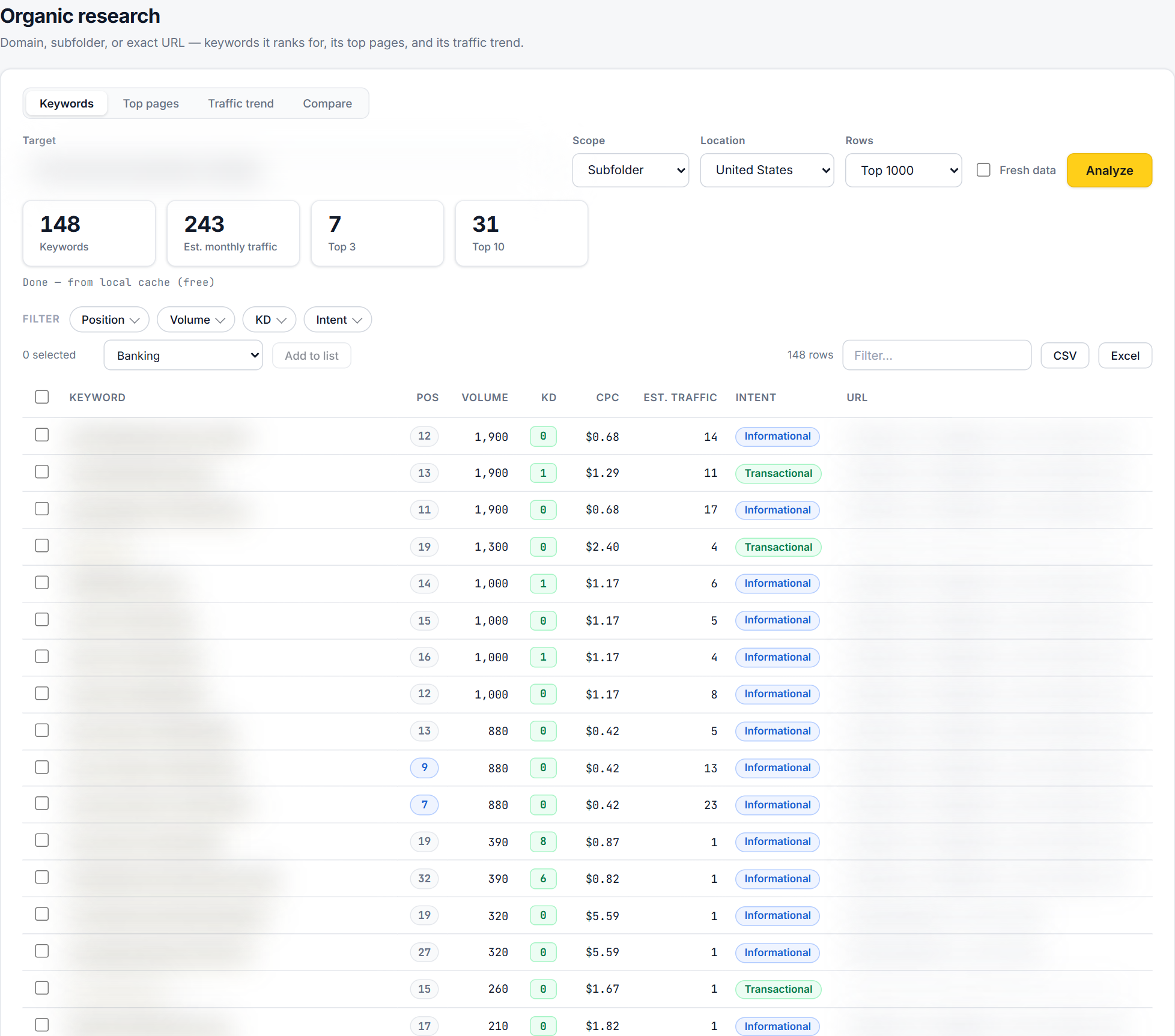
The blog’s US organic footprint contains 148 ranking keyword variants. Of those, 31 appear in the organic top 10 and seven in the top three.
Educational content brought reach; comparisons brought strong positions
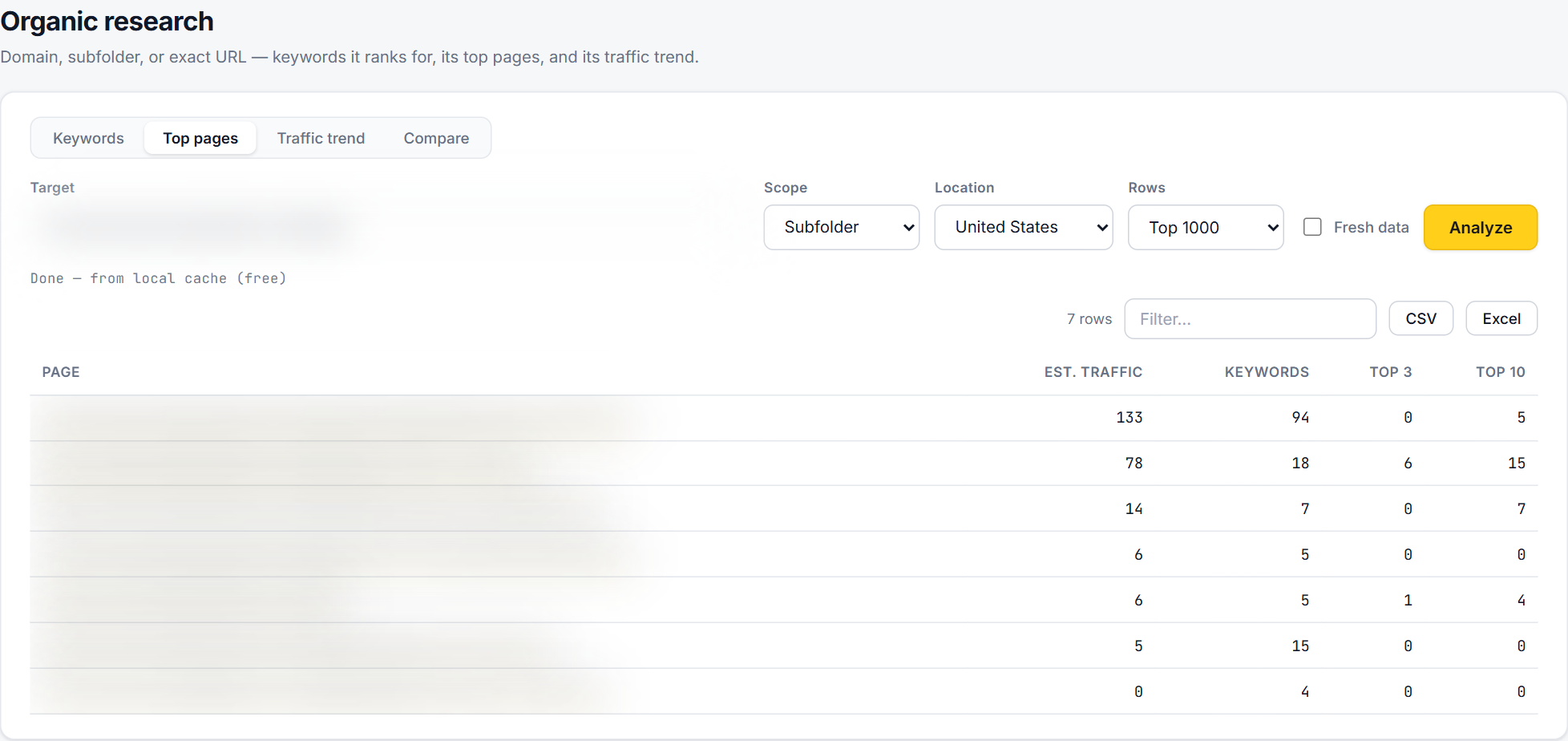
The leading recipe article accounts for approximately 133 of the monthly traffic estimate. A product-comparison article contributes another 78.
Two comparison articles account for 22 of the blog’s 31 top-10 keyword variants, giving the brand visibility when shoppers are actively comparing equipment.
Different content formats contribute in different ways
Seven blog-area URLs have organic rankings: six articles and the blog index. The largest recipe page contributes about 133 to the monthly traffic estimate; a product-comparison page contributes about 78. Together, those two pages represent approximately 87% of the modeled total.
Two comparison articles account for 22 of the 31 top-10 variants. This shows visibility around product evaluation alongside the broader educational reach.
Documented source citations in two AI surfaces
Google AI Overview records contain 57 distinct queries citing four blog-area URLs. Separately, seven ChatGPT answer records cite four blog articles.
The cited content includes educational guidance and product comparisons, extending the blog’s visibility into another part of the research journey.
- 148 US ranking keyword variants
- 31 keyword variants in the organic top 10
- Approximately 243 estimated monthly organic traffic
- 57 Google AI Overview queries citing blog-area URLs
- Seven ChatGPT answer records citing blog articles
The search and AI visibility behind the results
Organic rankings and page performance
We reviewed the blog’s US organic visibility using DataForSEO. The keyword and page exports show where the content ranks and how each page contributes to the estimated traffic total.
The screenshots below show the blog’s ranking footprint and page-level figures, with identifying details removed.
Source citations in Google and ChatGPT
We also reviewed stored AI answers to identify where the blog appeared as a cited source. Google citations cover recipe content, a product comparison, practical guidance and the blog index. ChatGPT citations include comparison articles and educational content.
The research was retrieved on 8 October 2026, using US and English settings.
- Blog-specific keyword and page exports from DataForSEO
- US search data with related keyword variants retained
- Page-level figures reconciled with the keyword totals
- Google AI Overview and ChatGPT source citations reviewed separately
- Anonymized screenshots showing the underlying organic figures
What clients say after the work.
Phrase It wrote SEO content for us, and we were really pleased with the results. The content was well researched, strategically optimized for search, and written with both our audience and business goals in mind. They understood our brand quickly and delivered polished, useful content that reads naturally. The entire process was smooth and professional.
I've worked with Tamara for four years now, and at this point she's the only writer I send blog work to. She hits every deadline, she's organized (nothing falls through the cracks) and the posts she writes actually rank. Some of the posts are still pulling traffic a few years later, which is the whole point and is harder to find than it should be. She's written for multiple of my clients and adjusts her voice to each one without me having to explain it twice. When you run a small agency, the people you can delegate to and stop thinking about are worth a lot. I never have to worry about Tamara; I just know every month the work is done.
Working with Phrase It has made a real difference to our inbound marketing. We achieved first-page rankings across our main service categories, while qualified inbound leads increased by 286% year over year. We’re now even seeing Colour Fiction recommended in ChatGPT when prospective clients look for services like ours. Tamara understands how to connect search visibility with actual business opportunities.
Phrase It helped turn SEO into a measurable revenue channel for our business. The work influenced more than $356,000 in revenue, giving us a clear commercial return - not simply more traffic or better rankings. Tamara kept the strategy focused on the searches and pages that could genuinely contribute to growth.
Tell us what you want your website to achieve.
Share your site, goals, and what is getting in the way. We'll reply with the clearest next step, whether that is working together or fixing something first.
Prefer email? info@phraseit.agency